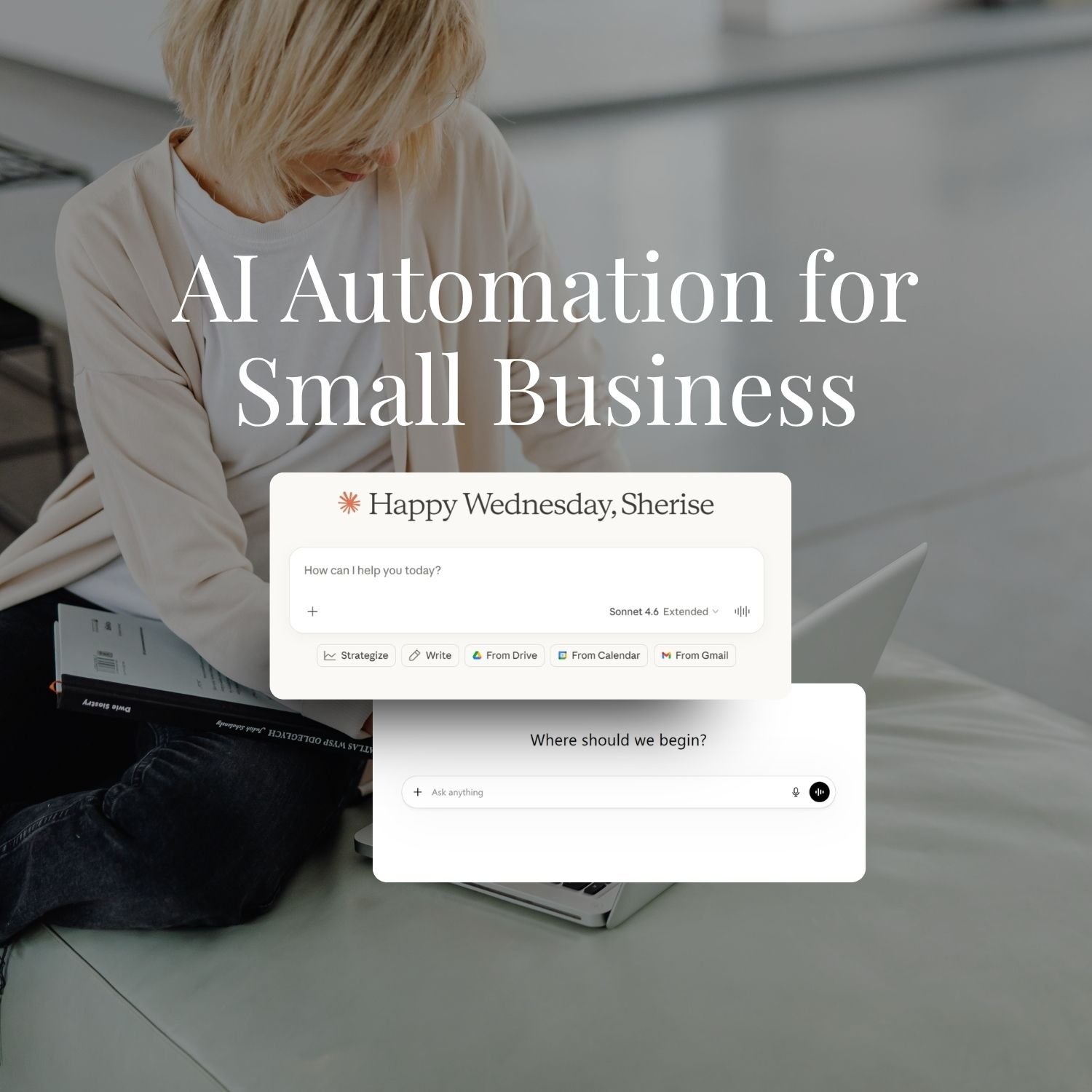
ChatGPT vs Claude for Business (2026): Which One Should You Actually Use?
Last updated August 2026
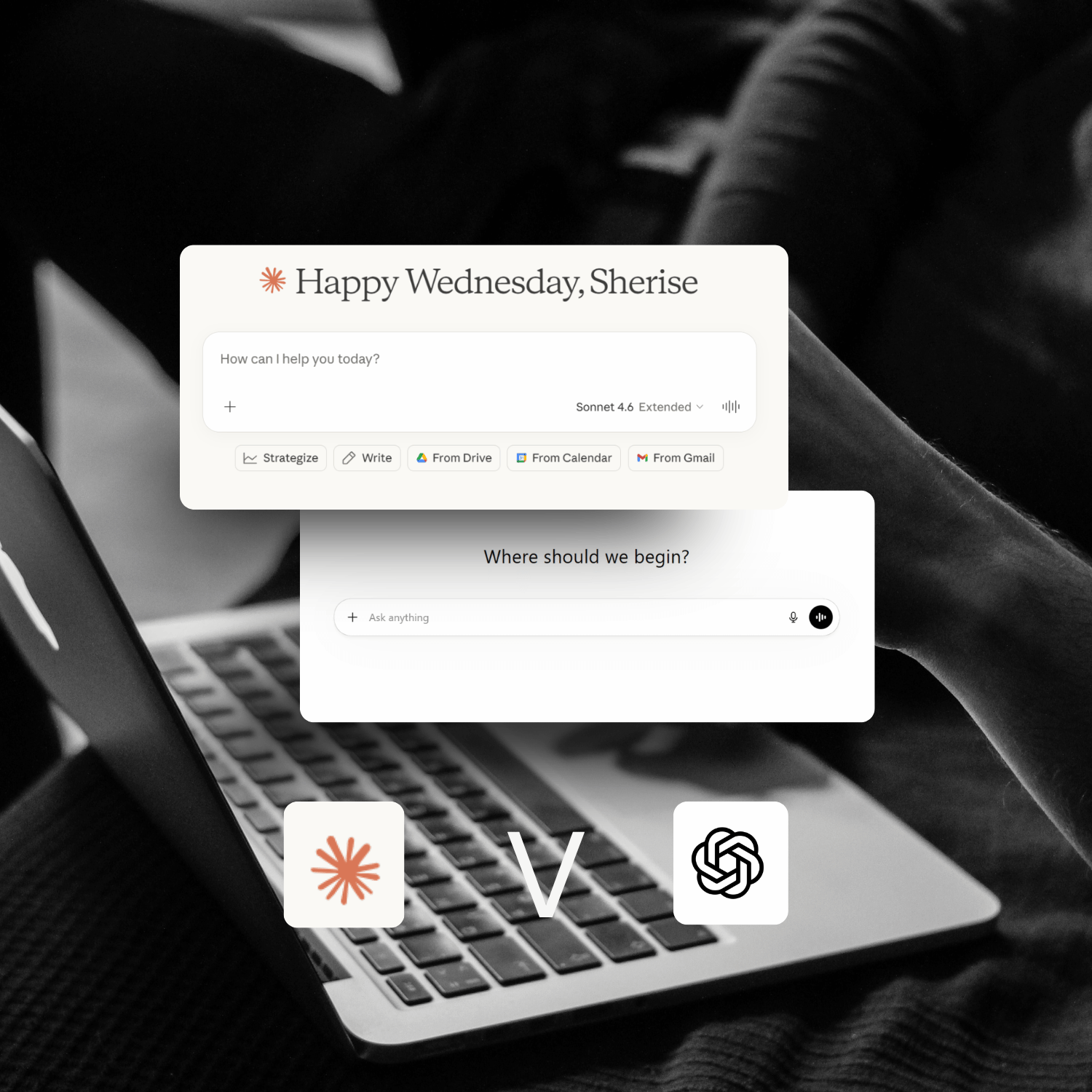
ChatGPT is stronger for brainstorming, image generation, and sharing custom GPTs with clients. Claude produces more natural writing, handles complex strategy better, and offers Skills that carry your brand context across every conversation. Most service-based business owners will get the best results using both, but Claude is more than capable on its own if you choose to go all-in there.
By mid-2026, the ChatGPT vs Claude conversation has moved past writing quality. The real question is what kind of AI infrastructure you're building, and which platform gives you the architecture to build it properly.
I run my business almost entirely on Claude. My morning briefing pulls from my email, calendar, and sales data and lands in Slack before I open my laptop. Email drafts are waiting in my inbox. Blog intelligence reports run on a schedule. Content gets created, formatted, and staged for publishing without me sitting there watching it.
That's Claude, with 400+ connectors wired into the tools I already use, scheduled tasks running autonomously, and a Skills layer carrying my brand voice into every piece of work.
ChatGPT still earns its spot in my stack. But for different reasons than most people think.
If you left ChatGPT after Anthropic refused the Pentagon deal and OpenAI signed it, Claude can hold its own. This post will show you what that looks like. If you're still on both and want to stop guessing which to open, it'll sort that out too.
Here's how it actually plays out.
| ChatGPT | Claude | |
|---|---|---|
| Writing quality | Good for quick drafts and short copy | Better for long-form; fewer editing passes needed |
| Brainstorming | Faster, higher volume, agrees with most ideas | More considered, challenges vague briefs, challenges instead of agreeing |
| Image generation | Definitely superior | Yes, but the quality is lower |
| Shareable tools | Custom GPTs — one link, anyone can use | Claude Skills — but they need to be installed and give access to IP |
| Brand context | Now shared via Skills too (adopted July 2026); Custom GPTs still siloed | Shared across all work via Skills and Projects |
| Tool connections | Limited | 400+ connectors (Gmail, Drive, Notion, Canva, Make.com, and more) |
| Desktop automation | ChatGPT Work (agent tool, launched July 2026) | Cowork (launched Jan 2026, more mature) |
| Strategic pushback | Tends to agree | Asks clarifying questions; challenges weak briefs |
| Best for | Speed, images, client-facing tools | Writing, strategy, anything that needs your brand voice, actually 'doing' work |
| Price | $20/month USD (Plus) | $20/month USD (Pro) |
The short version:
ChatGPT and Claude have genuinely different strengths. Using both gives you better results than committing to one.
ChatGPT wins for distribution, brainstorming, image generation, and speed.
Claude wins for writing quality, strategic thinking, and deep brand context through Skills and Projects.
If you’ve left ChatGPT for ethical reasons, that’s a completely valid choice, and Claude can hold its own.
Building your AI assets to be platform-agnostic protects your business when platforms shift overnight.
New here? This blog is for the solo founder who wears every hat in the business, and wants real AI systems and workflows running things, not just piecing it together in the chat. Start here →
Why I Use Both (And Why Picking a Side Misses the Point)
The conversation right now is polarised, and honestly, I get it.
Anthropic refused to let the Pentagon use Claude for mass surveillance and autonomous weapons. OpenAI signed that same deal hours later. People are angry, and they should be allowed to make purchasing decisions that align with their values. If you’ve decided to leave ChatGPT over this, I completely respect that. Full stop. That’s a legitimate, values-driven business decision, and I’m not here to talk you out of it.
My decision to use both platforms was made months before any of this happened, and it was purely practical.
I started on ChatGPT. Built my entire product suite there. Over 40 custom GPTs across content creation, email, strategy, podcasting, and more. ChatGPT was home.
Then I started testing Claude for writing work, and the difference in output quality hit me almost immediately. It was more natural, and there were fewer AI tells that make your audience scroll past without stopping.
So I didn’t switch. I expanded. I kept building on ChatGPT while weaving Claude into my daily workflow for the tasks it handles better. My clients use different platforms depending on their preferences, and I wanted to meet them wherever they were.
Here’s what I’ve landed on: the question isn’t which platform is better. It’s which platform is better for the specific thing you’re about to do. And if you’ve chosen to use only one of them, you can still make that work brilliantly. This post will help either way.
This comes back to something I believe about AI in business generally: AI should carry the execution while you stay in the strategic decisions. Both ChatGPT and Claude can do that. They just do it differently. And being platform agnostic will always be a win in my book.
Takeaway: You don’t owe loyalty to a platform. You owe it to yourself to use the tools that serve your business, your values, and your time.
Where ChatGPT Still Wins in My Business
If it weren’t for custom GPTs, I’d probably lean much harder into Claude. But the distribution model for custom GPTs is something Claude simply doesn’t have yet, and for a business like mine, that matters.
I’ve built 40+ custom GPTs that my clients use daily. Callie writes their Instagram captions in their voice. Charlie generates 50+ strategic content ideas in minutes, mapped to attract, nurture, and convert. Coraturns a single idea into a full carousel. Winter writes entire welcome email sequences. Each one is trained with marketing psychology and brand voice rules built in, so the output actually sounds like the person using it, not like a chatbot on its best behaviour. They’re purpose-built tools, and hundreds of business owners use them to get their content done in a fraction of the time.
Claude doesn’t offer that yet. I’m building Claude Project versions of my tools (more on that shortly), but the delivery experience requires more from the client. They need Claude Pro, they need to set up the Project, they need to load reference documents. It works well once it’s running. Getting there takes a few more steps.
Beyond distribution, ChatGPT is genuinely better for brainstorming. When I need volume, when I need ten ideas fast, when I’m riffing and iterating and just need the AI to keep up with my brain speed, ChatGPT matches that energy. Claude is more considered. More thorough. Sometimes I don’t need thorough. I need fast and a bit chaotic.
Image generation via DALL-E is another reason ChatGPT stays in my stack. I use it for content visuals, social graphics, and quick concept mockups. Claude isn’t great at this yet.
Takeaway: ChatGPT earns its spot through distribution, speed, and creative breadth. It’s where I build products and brainstorm ideas. It’s not where I write anymore. ChatGPT has moved a long way since I wrote this, and here is what actually changed.
Where Claude Outperforms in My Business
Claude’s writing quality is what made me pay attention. It stayed because of everything else.
When I write blog posts, emails, sales copy, or anything long-form, I open Claude. The difference shows up in the first draft.
But writing quality alone wouldn’t justify a second subscription. What keeps Claude in my daily workflow is the combination of Projects and Skills.
Claude Projects are workspaces where I upload reference documents, set specific instructions, and give Claude persistent context about a particular area of my business. When I open my blog writing Project, Claude already has my blog structure, my SEO playbook, my internal links, and my voice rules loaded. I don’t re-explain a thing. I just start writing.
If you want to set one up for your business, How to Build a Claude Project walks through the full process with real examples.
Claude Skills take this even further, and honestly, they’re the feature I think most people are sleeping on. Skills are reusable instruction sets that apply across every conversation and every Project. I have a brand playbook skill carrying my voice, my offers, my audience profile, and my messaging pillars. A blog writer skill with my full post structure and ideation methodology. An email subject line skill. A carousel creator skill. The list goes on…
I've covered the full comparison of how Skills differ from Custom GPTs in Claude Skills vs Custom GPTs.
Every time I open Claude, all of that is already active. No pasting a brand brief at the start of every chat. No “here’s my tone of voice” preamble. Claude just knows.
Memory works alongside Skills too — once it's turned on, Claude carries what it already knows about your business into every new conversation instead of starting from zero. How Claude's Memory Works covers exactly how it's built and how to set yours up properly.
This used to be the clean line between the two platforms: Custom GPTs were islands, Claude Skills were the shared layer. That line has moved. ChatGPT adopted the same open Skills standard Anthropic built for Claude, so ChatGPT has Skills now too, and a Custom GPT is no longer your only option there. What still separates them is maturity and reach. Claude has run Skills since October 2025 and threads them through Projects and Cowork, so the shared context is woven into everything you do. If you want the full picture of where ChatGPT's Skills landed, I've written it up in Does ChatGPT Have Skills Like Claude?
According to Atom Writer, 85% of marketers now use AI content tools, but 81% struggle with brand voice consistency. Claude’s Skills architecture is the most effective solution I’ve found for that gap, because the voice context isn’t siloed inside one tool. It follows you everywhere.
Claude also pushes back in a way ChatGPT doesn’t. Give it a vague brief, and it’ll ask clarifying questions instead of generating something generic. Ask it to review a strategy, and it’ll tell you what’s weak. ChatGPT tends to agree with whatever you throw at it. For strategy work, Claude’s pushback leads to better output. Sometimes annoyingly better. But better.
It still needs the right brief to do it, and Why Claude Agrees With Everything You Say walks through exactly how.
One more thing worth flagging: agent tools. Claude has Cowork, and ChatGPT now has ChatGPT Work, which landed in July 2026. Both take an outcome and go and do the job across your connected tools instead of just answering in a chat. Claude has had Cowork running since January, so it's the more mature of the two right now. I've compared them properly in ChatGPT Work vs Claude Cowork.
Takeaway: Claude handles my writing, strategy, and anything that needs deep brand context. Skills and Projects are the features that make it feel like Claude actually knows my business, not just my latest prompt.

Getting Claude properly set up is the fastest way to feel the writing quality difference yourself.
This free kit walks you through every setting worth turning on, how Projects and Skills work, and the exact prompt to export your ChatGPT memory so you're not starting from scratch.
It's the guide I wish I had when I first started.
Why I Build for Both Platforms
This is the part most “ChatGPT vs Claude” articles skip entirely. And I think it’s the most important part.
When I build a custom GPT, the instructions, voice rules, and strategic frameworks I create aren’t locked inside ChatGPT’s walls. They exist as standalone documents I own. My brand playbook is a reference file. My blog structure is a markdown document. My voice rules are a transferable set of instructions. Those assets can become a custom GPT, a Claude Project, or a Claude Skill, depending on the use case.
The #QuitGPT movement proved exactly why this matters. People who had invested months (or years) into ChatGPT, building custom GPTs, training memory, layering context, suddenly found themselves locked into a platform they no longer wanted to support. Their AI infrastructure wasn’t portable. The thought of starting from scratch on Claude was enough to keep some people on a platform they’d otherwise have left.
I didn’t have that problem because my instructions, my playbook, my frameworks all exist outside any platform.
When I decided to offer Claude versions of my products alongside the ChatGPT versions, the conversion wasn’t starting over. The strategic thinking, the voice documentation, the workflow design: all transferable. The instructions needed adjusting for how Claude handles context differently, but the intellectual property moved across cleanly.
For clients inside SheScales, this means they get both versions. They’re not locked into one ecosystem. If their preferences change, if pricing shifts, if they make an ethical decision about which companies they want to support, their tools still work.
Even if you only use one platform right now, here’s my recommendation: document your AI workflows in a way that’s portable. Write your voice rules as a standalone document, not just as ChatGPT custom instructions. Build your frameworks as reference files you own, not as prompts you’ve memorised. That way, you’re investing in your own intellectual property, not in someone else’s infrastructure.
And if the day comes when you need to move? You’ll be ready in hours, not weeks.
If you’re new to Claude and want to understand the platform before committing, New to Claude? What I Wish I’d Known Sooner covers the learning curve, the usage limits, and the features most new users miss.
If you're setting Claude up specifically for your solo business, I've written a complete step-by-step setup guide — start here.
Takeaway: Your AI assets should belong to you, not to a platform. Build them to be transferable and you’ll never be caught out when the landscape shifts, whether that shift is technical, financial, or ethical.
How to Decide Which One to Open
You don’t need a decision tree or a spreadsheet for this. You need one question: what’s the job right now?
Open ChatGPT when you need: Speed (quick first drafts, rapid brainstorming, volume over polish). Visuals (image generation for content, mockups, or social graphics). Distribution (a tool you want to share with a client or team member with one click). Exploration (riffing, testing ideas, playing with concepts before you commit to a direction).
Open Claude when you need: Writing that sounds like a human wrote it (blog posts, emails, sales copy, anything your audience reads). Strategic depth (offer audits, messaging refinement, business strategy, anything where you want the AI to challenge your thinking). Brand context (any task where your voice, your audience profile, or your frameworks need to inform the output; Skills handle this automatically). Long documents (analysing contracts, reviewing briefs, working with large reference material).
Choose only Claude if: You’ve decided to leave ChatGPT and want a single-platform setup that can handle the majority of your business needs. Claude with Projects and Skills is more than capable of running your content, strategy, and writing workflows on its own. You’ll miss image generation and the GPT distribution model, but for content-heavy businesses, Claude holds its own.
For anyone running both, the $40/month USD total pays for itself in the first week. If AI saves you 10 or more hours a week (and it should), the subscription cost is not the variable to optimise.
Be loyal to good results, not to a logo.
If you want the strategic thinking for how to structure AI across your whole business — not just which tool to open but how to build the layer — What Is an AI Architect is where to go next.
Takeaway: Match the tool to the task. Speed and sharing go to ChatGPT. Writing and strategy go to Claude. Both together give you coverage that neither provides alone. And Claude by itself is a strong choice if that’s where your values lead you.
FAQ
Is Claude better than ChatGPT for writing?
For long-form, nuanced content, yes. Claude’s output sounds more natural, requires less editing, and holds a consistent tone across longer pieces. ChatGPT is faster for quick drafts and brainstorming, but the writing quality gap has widened in 2026 after OpenAI acknowledged issues with their latest model’s prose. If writing quality is your primary concern, Claude is the stronger tool right now.
Should I cancel ChatGPT and switch to Claude?
That depends on your needs and your values. If you’re leaving ChatGPT for ethical reasons, Claude is a genuinely capable alternative that can handle most business content tasks on its own. If you’re choosing based on features, most serious AI users in 2026 use both and route different tasks to different tools. If you’re only paying for one subscription and your main need is content creation, Claude is the better writer.
What are Claude Skills?
Skills are persistent instruction sets that Claude applies across everything you do. You set up the skill and Claude is able to carry its knowledge into every conversation and Project from that point forward. Think of them as your brand’s operating system inside Claude. They’re the feature I wish more people knew about.
Can I use Claude for free?
Yes, with limited messages on a rolling window. Free users now have access to Projects and Artifacts, which is a significant upgrade from earlier in the year. The free tier is enough to test whether Claude suits your workflow, but if you’re using it for real business work, the Pro plan ($20/month USD) removes most of the friction around usage limits.
What’s the difference between a Custom GPT and a Claude Project?
Custom GPTs are shareable products. You configure instructions, upload files, and share them with a link. Your client clicks once, and they’re using it. Claude Projects are personal workspaces with deep context. You upload reference documents, set instructions, and Claude holds everything about that area of your business in memory. Different tools for different jobs: GPTs for distribution, Projects for depth.
Can AI actually write content that sounds like me?
Yes, but only if you train it properly. The reason most AI content sounds generic is because most people give AI zero context about their voice, their audience, or their offers, then wonder why it sounds like a robot. When you feed AI your voice rules, examples of your best writing, your audience profile, and clear instructions about what to do (and what to never do), the output shifts dramatically. This is exactly how I build my custom GPTs and Claude Projects. Callie, my Instagram caption tool, writes captions that my clients regularly describe as “sounding like me on my best day.” That’s not magic. It’s training. And it’s the same principle whether you’re on ChatGPT or Claude.
key takeaways
The short version of everything above, for the people who skim:
ChatGPT and Claude have genuinely different strengths. Using both gives you better results than committing to one.
ChatGPT wins for speed, image generation, brainstorming volume, and Custom GPT distribution to clients.
Claude wins for writing quality, strategic depth, and brand voice consistency through Skills and Projects.
If you've left ChatGPT for ethical reasons, Claude can hold its own as a single-platform setup for content and strategy work.
Document your AI assets (voice rules, frameworks, instructions) as standalone files you own. Platform-agnostic infrastructure protects your business when the landscape shifts.
What to Do Next
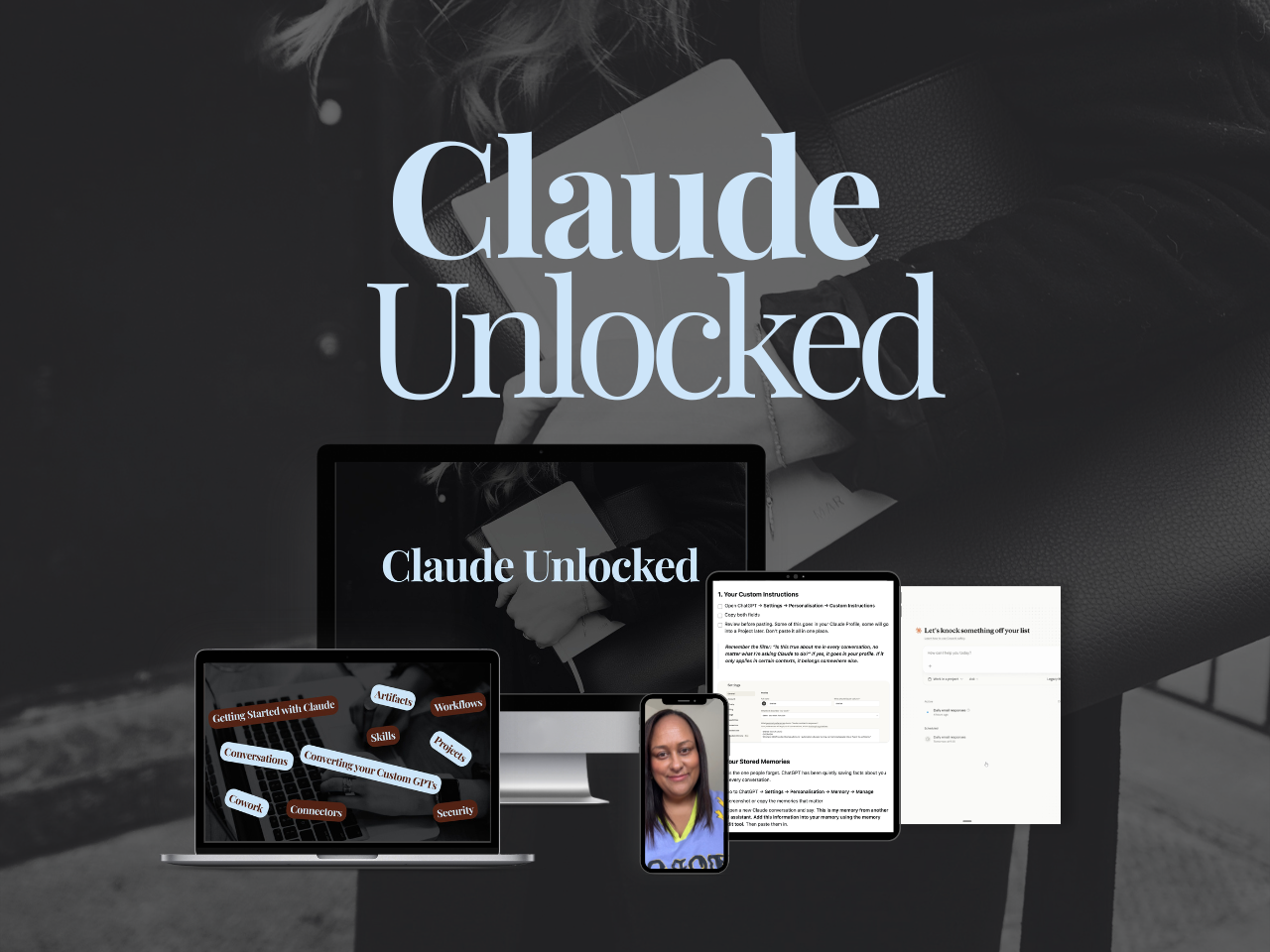
If you want to go past the setup and build Claude into a proper business system - Projects configured for your specific use cases, Skills that run your recurring work, Connectors that link Claude to the tools you already use, tasks running without you sitting there watching - that's what Claude Unlocked covers. It's $47 for a limited time and takes an afternoon to complete.
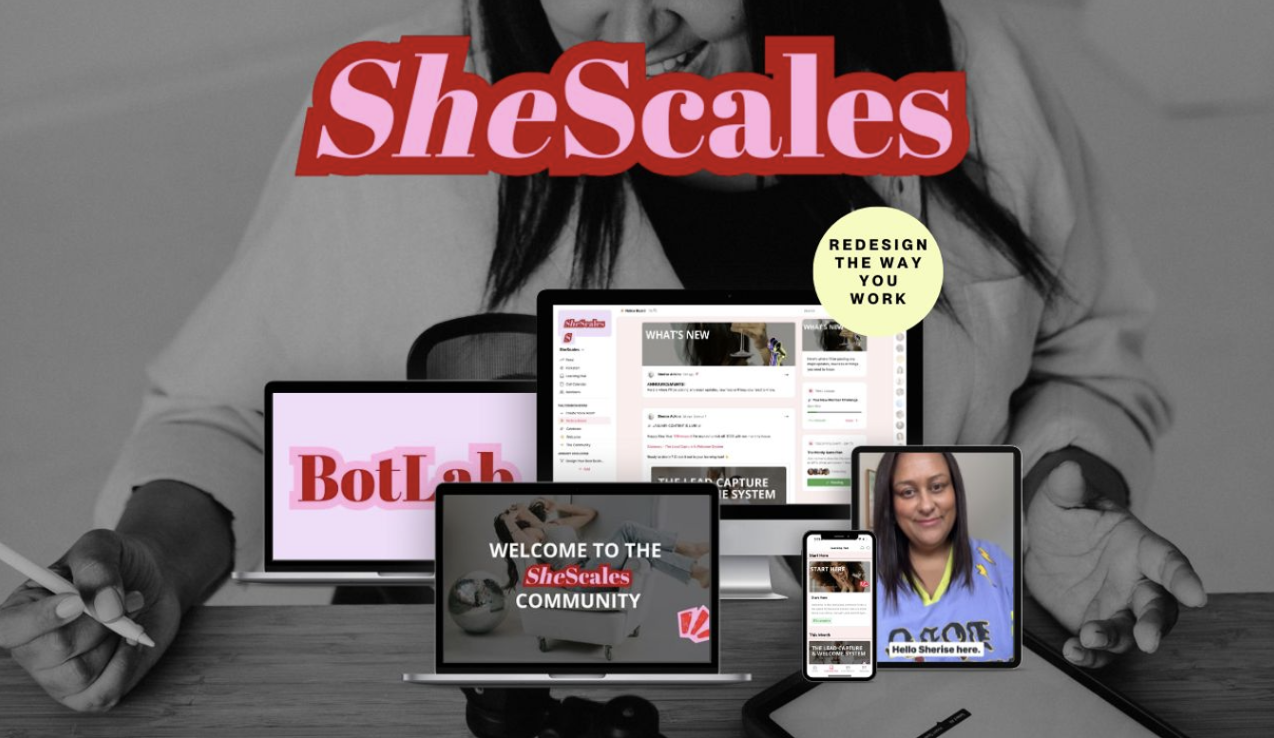
For the full AI-powered business setup, SheScales is my community where members get a new AI toolkit every month, built for both ChatGPT and Claude, with live coaching to implement. It’s for business owners who want AI doing 80% of the execution so they can focus on the 20% that actually requires their brain.
If you want to stop tinkering and start building your AI layer with structure and support behind you, that’s where we do it.
The AI landscape will keep moving. Platforms will update, pricing will shift, new features will drop, and new controversies will reshape how people feel about the companies behind these tools. The businesses that stay ahead are the ones who build their AI layer to be portable, intentional, and always in service of the work that matters.
Your tools should work for you. Not the other way around.
MEET THE AUTHOR

HEY, I'M SHERISE
I'm an AI strategist and educator based on the Central Coast of NSW, Australia. I help solo founders install AI systems that scale their business without scaling their workload and remove low-value work from their business so they can spend more time in strategy, creativity, and the work that actually moves the needle.
I run SheScales, the AI implementation community built for the person who IS the business and the whole team. I'm the founder behind 40+ AI assistants across ChatGPT and Claude, the Brand Playbook App, and a growing library of skills and systems used daily by hundreds of solo businesses.
I teach the Architect Method: the shift from chatting with AI to giving AI a job. It's the thinking framework for spotting where AI can genuinely help in your business, knowing how to architect the system, and deciding whether something should be a Skill, a Project, a GPT, an automation, a combination of these, or stay manual.
I'm not here to inspire you. I'm here to hand you the architecture.