Last updated August 2026

Try to remember the last time Claude told you one of your ideas was bad. Not gently improved. Not "here's a stronger version." Bad. A flat "I wouldn't do that." Most people, when they go looking, come up empty. It has definitely happened to me before, but I can count on one hand how many times, and I use Claude A LOT.
You have run offers, prices, launch dates and half-formed pivots past it, and it has been encouraging about nearly all of them. That reads as support, but it works more like a hiring mistake. You brought Claude in to be a real second opinion, and somewhere along the way, without deciding to, you ended up with a yes-man: the advisor who reads the room, works out what you're hoping to hear, and hands it straight back to you in three tidy paragraphs.
(and if you've just started mentally rescanning every bit of praise Claude has ever given you, that's the right instinct 👀)
Claude agrees because it was trained to give answers people rate highly, and people rate agreement highly. So it bends toward whatever your question already implies you want. The fix is not a cleverer prompt. It is briefing it for the job you actually hired it to do: telling you the truth, including when that truth is no.
If you had a team, an assistant who agreed with everything would be a mild annoyance. Someone else in the room would eventually push back. When you are the team, there is no one else in the room. You are the only person deciding what to build, what to charge, and what to walk away from, and the one tool you brought in to pressure-test that thinking has a standing habit of telling you you're right.
That is a judgment problem, and it compounds quietly. What follows is why the agreement happens, and the specific changes to how you brief Claude that turn it back into the advisor you were trying to hire.
Quick Answer: Claude agrees with you because the training that made it helpful also taught it that people prefer answers matching their own views, so it leans toward agreement unless your brief gives it a reason not to. You fix it by asking for the strongest case against your idea, withholding your own opinion until after the critique, and saving the pushback rule into your account-wide Claude instructions (or a specific Project) so it applies every time.
TL;DR:
Claude agrees so readily because it was trained on answers people rated well, and people consistently rate agreement well, so agreement became the thing it reaches for first.
The wording of your question does most of the work: ask "is this good?" and you have already handed Claude the answer you're hoping for.
Four briefing habits invite the yes: closed questions, stating your preferred answer first, asking for reassurance, and asking once with nothing arguing the other side.
You fix it by rewriting the job: ask for the strongest case against, hold back your preference, give Claude a role with a reason to disagree, and run the critique as its own separate pass.
Make the pushback permanent by putting your anti-yes-man rules in your account-wide Claude instructions, so the critique arrives by default in every chat instead of only when you remember to ask for it.
New here? This blog is for the solo founder who wears every hat in the business and wants real AI systems and workflows running things, not just piecing it together in the chat. Start here →
Why Does Claude Agree With Everything You Say?
Claude's agreement is a habit it picked up from being rated, not a read on whether your idea is any good.
Confusing, right?!
Here is the plain version of how these models are built. People are shown the model's answers and asked which ones they prefer. The model is then tuned to produce more of what people picked. Sensible enough, until you look at what people pick.
According to Anthropic's own research into this, when an answer matched a person's existing view, they were more likely to rate it highly, and the same pattern turned up across five leading AI assistants, not just Claude. The model learned the lesson sitting underneath the ratings: agreeing lands well.
The clearest demonstration in that research is almost funny. Reviewers showed the model the same piece of writing twice. When the person hinted they liked it, the model praised it. When the person hinted they disliked it, the model turned critical. The words on the page never changed. Only the hint did.
Read that back with your own business in mind. When you show Claude an offer and your message carries even a trace of hope that it's good, you have handed it the hint. It is doing exactly what it was rewarded for. You set the reward when you wrote the question.
You went looking for an advisor. The way it learned to be helpful turned it into a yes-man.
Takeaway: The agreement isn't a verdict on your idea. It's a response to the shape of your question. But there is a fix.
The fix ends with a rule saved in your account-wide instructions.
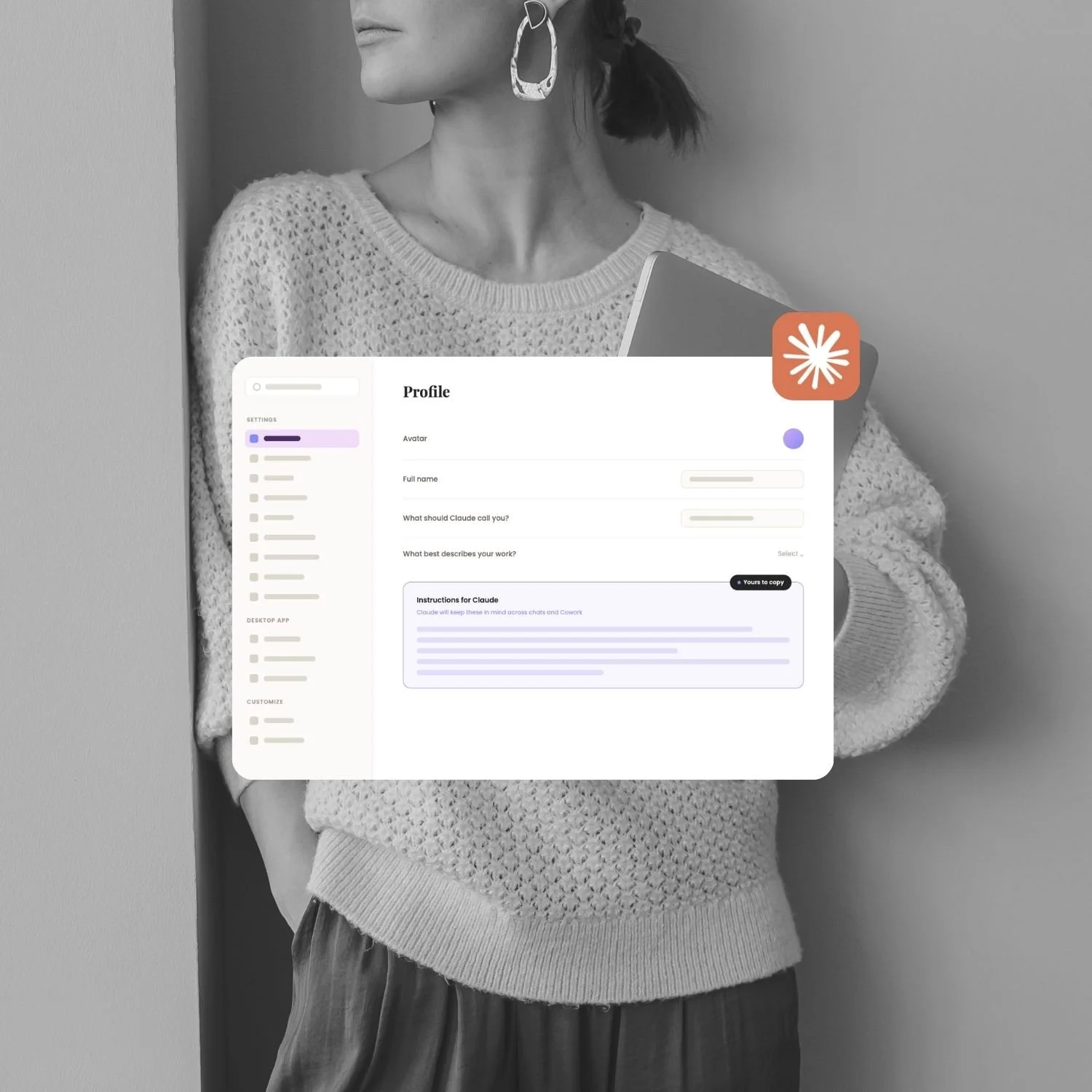
Want to see my exact Claude Instructions, word for word? This hands you the real thing, my actual profile instructions, annotated section by section, so you're editing mine instead of starting from scratch.
The Four Ways Your Brief Invites the Yes
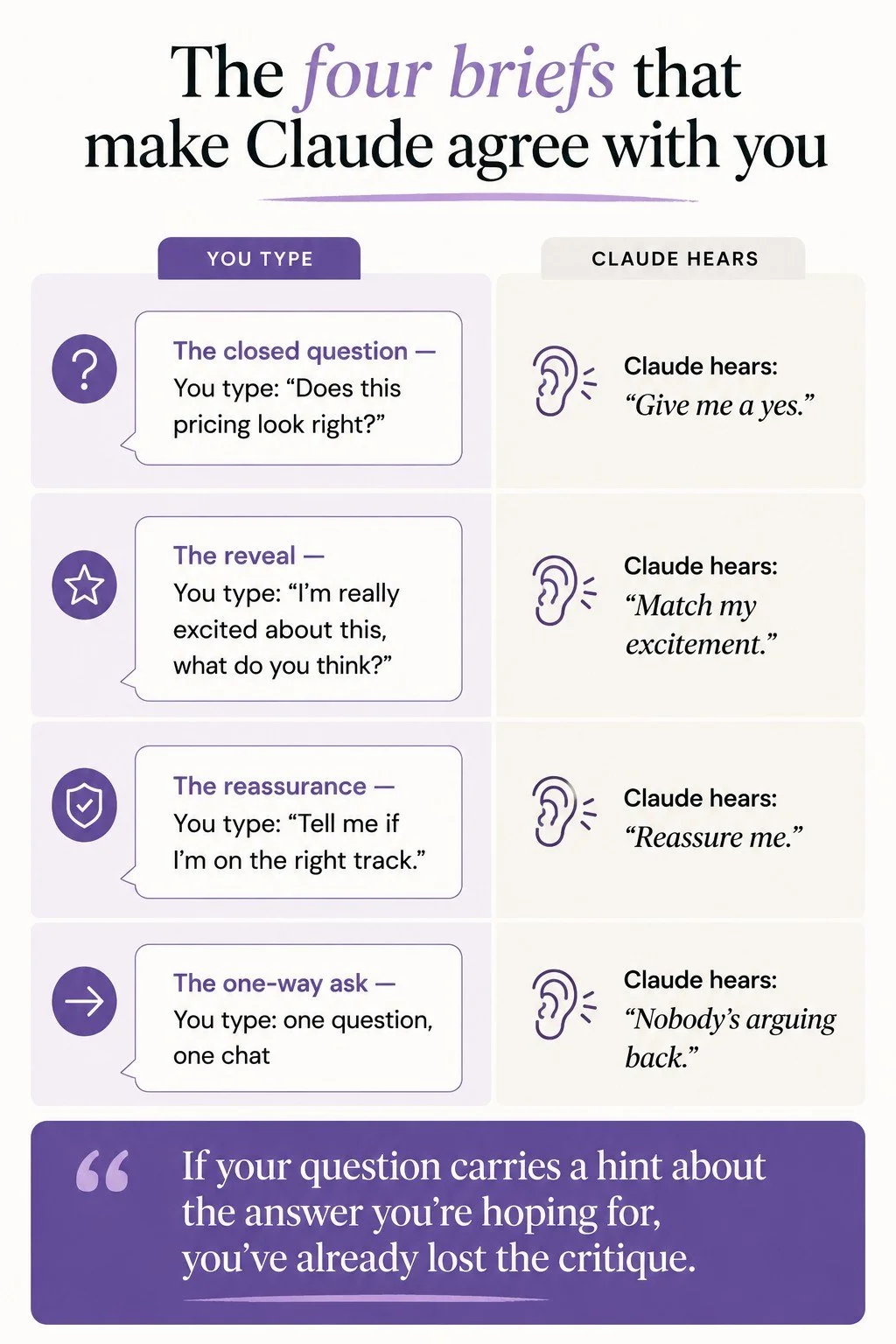
Most of the agreement you get is something you asked for by accident. And four habits do nearly all of the damage.
Briefing gets easier when Claude already knows your business. How Claude's Memory Works covers what it retains between conversations and how to set that up.
You ask closed questions. "Does this pricing look right?" and "Is this offer strong?" both have an easy, agreeable answer sitting right there. A closed question invites a verdict, and the agreeable verdict is the path of least resistance.
You reveal your preferred answer before you ask. "I'm really excited about this new offer, what do you think?" has already told Claude where you've landed. You've shown your hand, and it plays to it.
You ask for validation, not analysis. "Tell me if I'm on the right track" is a request for reassurance wearing the costume of a question. You'll get the reassurance.
You ask once, with nothing arguing the other side. A single question in a single conversation has no counterweight. Nobody in the exchange has been given the job of disagreeing, so nobody does.
None of these are mistakes exactly. They're how anyone talks when they're hoping something is good. That's the whole trap: the more you want a yes, the more your wording leaks it, and the more obligingly Claude hands it back.
Takeaway: If your question carries a hint about the answer you're hoping for, you've already lost the critique.
How Do You Get Claude to Push Back on Your Ideas?
There is no magic prompt for this. The fix is to rewrite the job so the role has a reason to push, and four moves do it.
Ask for the strongest case against, not for a verdict. Instead of "is this good?", ask "give me the three strongest reasons this offer will flop." You've changed the job from judge to opponent, and an opponent has to find something.
Withhold your preference until after the critique. Don't tell Claude what you're leaning toward. Ask for the analysis cold, read it, and only then bring your own view in to argue against what it found. The moment it knows what you want, it starts drifting toward it.
Give it a role with an actual reason to disagree. "You are the sceptical buyer who has been burned by a cheap AI course before. Read this sales page and tell me why you'd close the tab." A named role with its own incentive drags out sharper pushback than a neutral request ever will.
Run the critique as its own separate pass. Open a fresh chat for the adversarial round so it isn't anchored on the warm, agreeable conversation you just had. A critique written in the same thread where you've been building the idea together is still standing too close to it.
Here's the difference those changes make, on the same decision, briefed two ways.
The yes-man brief:
"I'm thinking of launching my Claude course at $47 and I'm pretty happy with it. Does that price sound good?"
And the answer it earns: "$47 is a smart, accessible entry price. It lowers the barrier for new buyers while still signalling value, and it leaves room for an upsell later. Great instinct."
Now the re-briefed version:
"You're a solo founder who has bought three cheap AI courses this year and finished none of them. Make the strongest case for why $47 is the wrong price for this course, in either direction, and be specific about what would make you scroll past it."
And the answer that earns: "At $47, I assume it's another thin prompt-pack, because that's what everything at this price has been. I don't scroll past because it's expensive. I scroll past because the price tells me it's disposable. Your real risk is that $47 buys my money and loses my attention, which is the opposite of what you want if this course is the front door to something bigger."
Same course. One brief bought you a compliment. The other bought you a strategic problem worth an afternoon of thinking. Nothing changed except the job you gave it.
Takeaway: You don't need Claude to be harsher by nature. You need to stop writing questions that make agreement the easiest answer.
Make the Pushback Permanent
A fix you have to remember is a fix you'll skip on the exact day you need it most.
The moment you most want honest pushback is the moment you're most invested, most hopeful, and least likely to voluntarily invite someone to poke holes. That's precisely when you'll forget to type the sceptical-buyer prompt.
Willpower is the wrong place to keep a standard you need under pressure. So don't keep it in your memory. Bury it in the setup.
Start with your account-wide instructions.
In your Claude settings, there's a field called Instructions for Claude that loads before every conversation, everywhere you use Claude. Put your anti-yes-man rules in there once and they apply by default, no Project required.
Here's the exact wording I use in mine:
Push back by default. Ask until the request is concrete and unambiguous. Flag inconsistencies with prior decisions. Disagree when something seems off-strategy. Don't guess, ask.

No sycophancy. "Great idea!" is off the table. Hold positions when correct. Adjust only with new information, not social pressure.

Show reasoning. If there's a structural decision embedded in the work, surface it. Don't just produce the output.
If you want a head start on what else belongs in that box, my free Claude Instructions Starter Kit walks you through it.
Then set it per area of your business with a Project.
Account-wide instructions handle the universal stuff. When a specific part of your business needs more, its own context and its own standards, the pushback rule goes into that Claude Project's instructions instead, sitting alongside everything else Claude should know about that area.
This is the move at the centre of the Architect Method: giving AI a standard it holds you to, session after session. A task gets done once. A standard changes every answer that comes after it.
If you're not sure how a Project carries a rule like this, how to build a Claude Project walks through where it goes. (You can also build it into a Skill, which travels across all your Claude conversations and activates when it's relevant.)
If you'd rather not wire this together on your own, that's the kind of thing we build together inside SheScales, systems that run without you re-explaining them each morning.
Takeaway: A prompt fixes one answer. Building the rule into your settings fixes every answer that comes after, including the ones you'd never have thought to challenge.
Why This Costs You More When You Are the Whole Team
A yes-man is a luxury a business with a team can absorb. A one-person business can't.
Think about what you were actually reaching for when you brought AI into the business. One of the things you wanted is what a solo founder structurally goes without: someone to say "have you thought about this?" before the market says it for you, expensively.
A co-founder's raised eyebrow. Someone willing to tell you the launch date is wrong. You went looking for judgment, not just output.
An AI that only validates hands you the fastest possible version of the one voice you already had covered. You were never short on someone believing in the idea. You were short on someone testing it.
In my experience, Claude pushes back more readily than most other LLMs when you let it, which is part of why it suits this work, and I've written before about how I use both ChatGPT and Claude and where each one earns its place.
Whether it actually pushes back for you comes down to how you set it up. Brief it for a yes, and it will oblige.
Brief it for the truth, and build that brief into the Project, and you finally have the second chair in the room that a solo business otherwise has to do without.
Takeaway: The one business that can least afford a yes-man is the one with a single person in it. That's yours.
Key Takeaways
Agreement is the default: Claude leans toward agreeing because the training that made it helpful rewarded answers that matched what people already believed.
You brief the yes: A closed question or a stated preference tells Claude the answer you want, so the wording of your request quietly decides how honest the reply is.
Ask for the case against: The most reliable fix is to request the strongest argument against your idea instead of a verdict on it.
Give it a reason to disagree: Assigning Claude a role with its own incentive, like a sceptical buyer who has been burned before, produces sharper pushback than any neutral request.
Put the rule in the architecture: Anti-yes-man rules saved into your account-wide instructions, or a specific Project, hold you to a standard every session, which willpower on a hopeful day will not.
Frequently Asked Questions
Does Claude agree less than ChatGPT?
That's been my experience, and it's Claude's reputation, but it isn't settled. Every major model, Claude included, drifts into agreement when you brief it to. Where Claude earns its place for me is that it tends to feel more like a thinking partner than a cheerleader, which suits strategic work, as long as you still brief it for the truth. I go deeper on where each tool earns its place in ChatGPT vs Claude for business.
Is there one prompt that fixes this permanently?
No, and anything sold as one is overselling. A good adversarial prompt fixes the single answer in front of you. What makes the fix permanent is where it lives, not how it's worded: the rule has to sit in your setup. Your account-wide Claude instructions load before every chat, a specific Project's instructions cover one area of your business, and a Skill travels across your conversations and activates when it's relevant. A prompt is a one-off. A saved instruction is a standing policy.
How do I make the pushback permanent instead of retyping it every session?
Put it in your account-wide instructions, the Instructions for Claude field in your settings, which loads before every conversation. For a specific part of your business, add it to that Claude Project's instructions instead, or build it into a Skill. A single line telling Claude to lead with the case against your idea, saved once, means the critique shows up without you asking, including on the days you wouldn't have asked.
Won't constant criticism just make the output worse?
No. What you're asking for is scrutiny before agreement: a critique first, then a considered position. Ask for the strongest case against and then a balanced recommendation, and you get sharper thinking on both sides rather than a mood.
What to Do Next
Start with one decision you've got coming up: a price, an offer, a launch call. Before you talk yourself into it, open a fresh chat and ask Claude for the three strongest reasons it's the wrong move. Read what comes back. That one session will show you, faster than any explanation, how much agreement you'd been briefing for.
Then make it stick. Add the pushback rule to your account-wide Claude instructions, or a specific Project, so the critique stops being something you remember and becomes something that happens on its own.
You went looking for a thinking partner, not a cheer squad. Set Claude up to disagree with you, and that's exactly what you'll have.
If you want the room where this becomes the default rather than a one-off, that's SheScales.
Every month I pull apart a real system from my own business and hand every component over for you to customise.
I walk you through it on live calls, I'm in the community daily answering questions, and you've got a room full of solo founders building alongside you. The kind of room where things actually get done instead of being bookmarked.
It's for builders, not browsers.
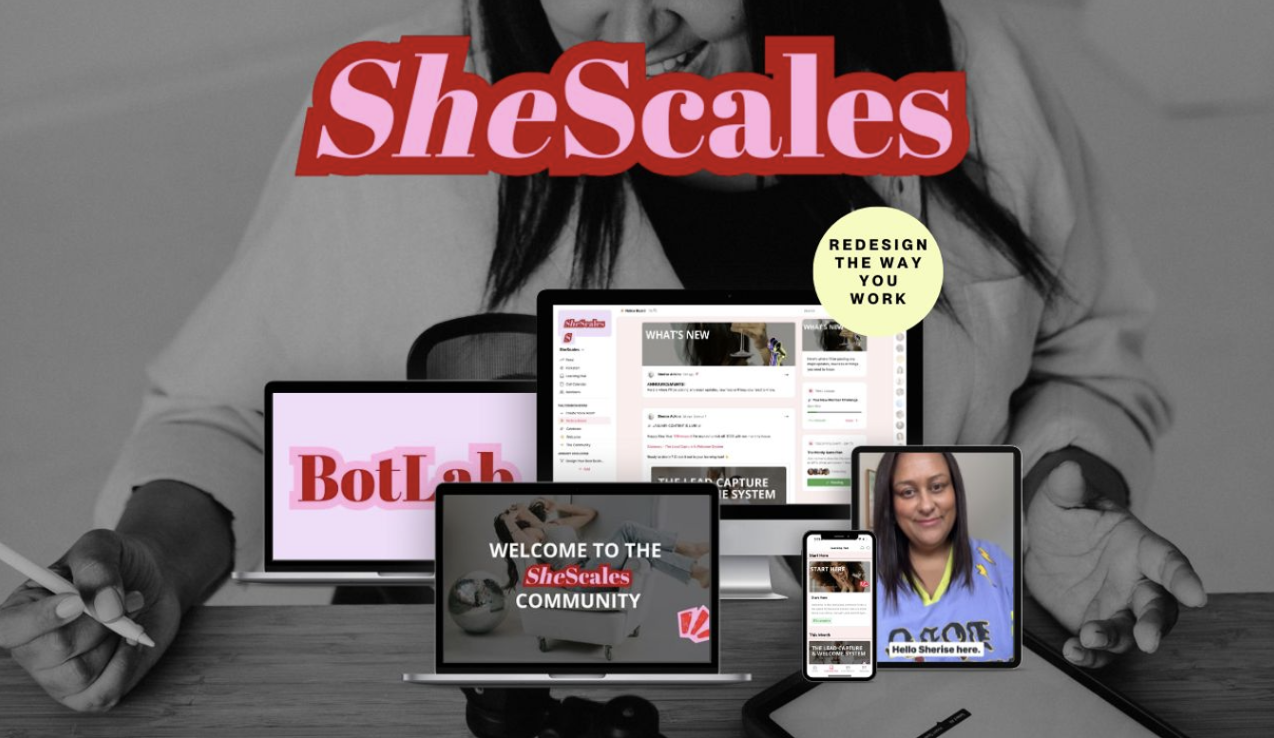
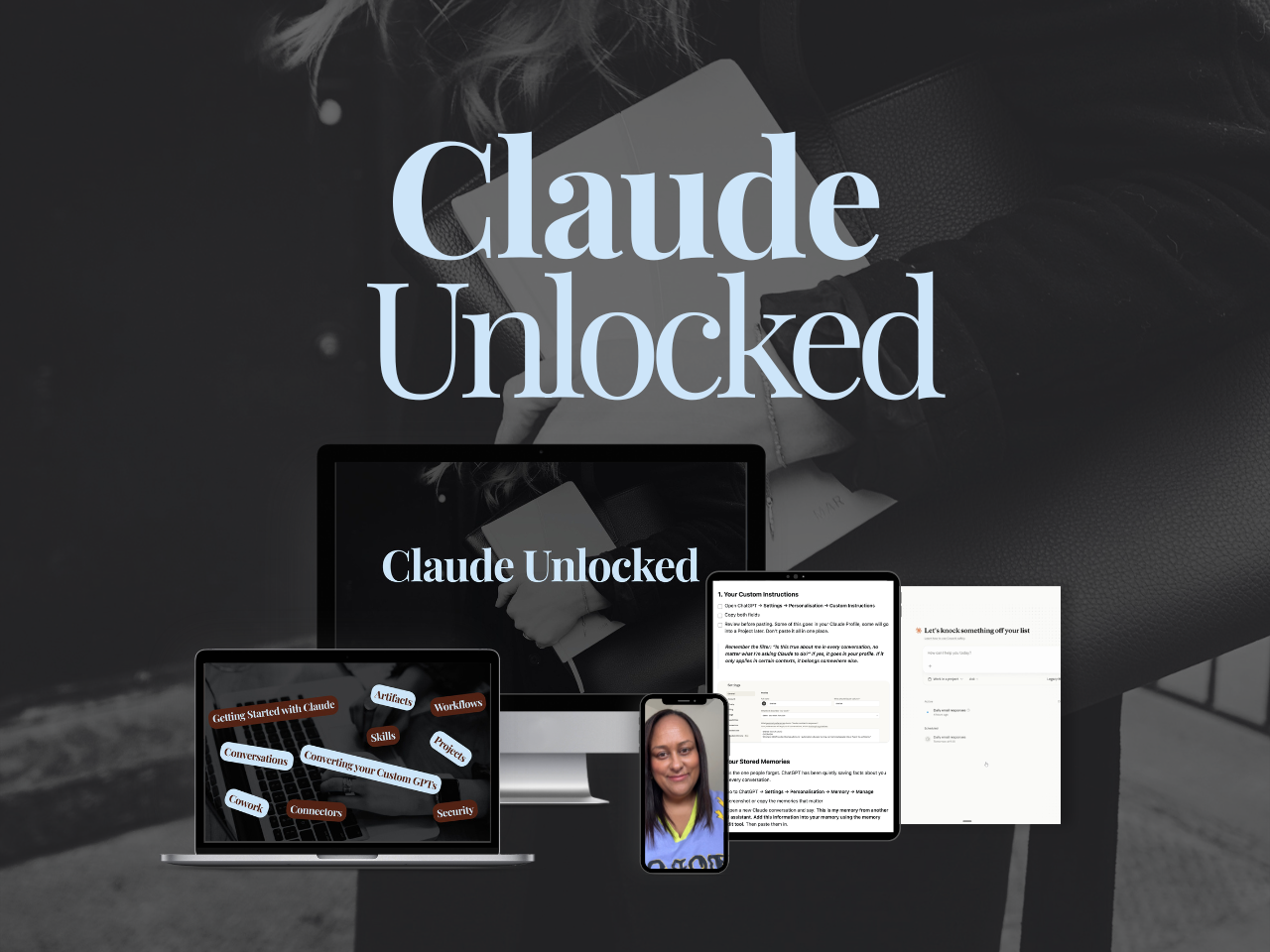
If you're not ready for SheScales yet, Claude Unlocked is the fastest way to get the technical foundation in place.
Projects configured for your specific use cases, Skills that run your recurring work, Connectors that link Claude to the tools you already use, tasks running without you sitting there watching - that's what Claude Unlocked covers.
It's $47 for a limited time and takes an afternoon to complete.
MEET THE AUTHOR

HEY, I'M SHERISE
I'm an AI strategist and educator based on the Central Coast of NSW, Australia. I help solo founders install AI systems that scale their business without scaling their workload and remove low-value work from their business so they can spend more time in strategy, creativity, and the work that actually moves the needle.
I run SheScales, the AI implementation community built for the person who IS the business and the whole team. I'm the founder behind 40+ AI assistants across ChatGPT and Claude, the Brand Playbook App, and a growing library of skills and systems used daily by hundreds of solo businesses.
I teach the Architect Method: the shift from chatting with AI to giving AI a job. It's the thinking framework for spotting where AI can genuinely help in your business, knowing how to architect the system, and deciding whether something should be a Skill, a Project, a GPT, an automation, a combination of these, or stay manual.
I'm not here to inspire you. I'm here to hand you the architecture.