ChatGPT Work vs Claude Cowork: Which Should You Use?
Last updated August 2026
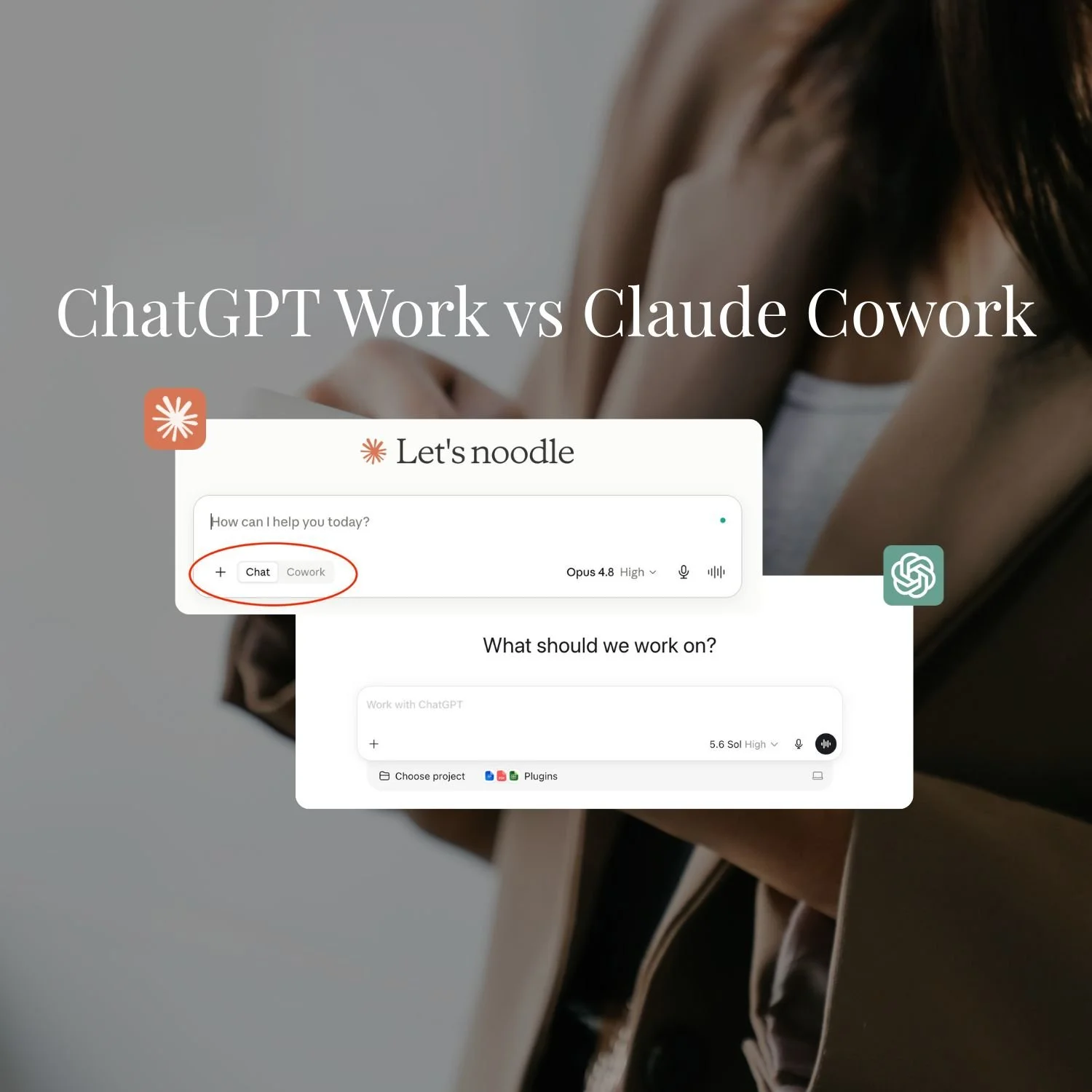
Everyone keeps asking me the same thing since ChatGPT Work landed: am I switching? The better question is how to use BOTH.
Here's what actually happened, and why it's bigger than either tool.
Old ChatGPT answered your questions and drafted text in a chat. You still took that text and went and did the actual job yourself.
ChatGPT Work is a different animal. You give it an outcome, and it goes and produces the actual thing, a document, a report, whatever you asked for. It uses the tools you already work in. It keeps going while you're away. It takes a big job, breaks it into steps, and works through them on its own.
If that sounds familiar, it's because Claude Cowork has been doing exactly this in my business for a while now 😅.
Every serious AI company is now building the same thing. Something that goes away and does the job.
Anthropic built Cowork. OpenAI just shipped ChatGPT Work. When both of them arrive at the same idea from opposite directions, that's usually a category settling rather than a trend passing through.
So it's not really a ChatGPT-or-Claude thing. They're both strong at different things, and the smart move for a solo founder right now is to actually learn where each one fits rather than pick a team.
Because this, connecting your tools to an AI that works on a schedule and does the whole job for you, is what changes how a one-person business runs. It's the shift we've all been waiting for, and it's becoming the new normal.
My mission is that every solo founder learns Cowork and ChatGPT Work, because it’s where your AI use actually gets to compound.
Quick Answer: ChatGPT Work and Claude Cowork are the same idea from two companies: an AI that connects to the apps you already use, works on a schedule, and delivers finished work instead of answers. Claude Cowork launched first and is more mature; ChatGPT Work is days old. Which one you reach for comes down to the job in front of you, because your context and skills are portable and both tools read from your own files.
TL;DR:
The shift matters more than the brand name. Both tools now go and do the whole job across your apps instead of just answering questions in a chat.
Claude Cowork has a head start. It launched as a desktop app in January 2026 and has been doing real business work for months; ChatGPT Work launched on 9 July 2026.
The old "cloud vs local files" difference is already gone. Both now work with your local files on desktop, so that's not the deciding factor anymore.
Your context is portable, so you're not locked in. Keep your skills and brand files as your own, point either tool at the same folders, and hand each job to whichever one does it best.
Using both is a legitimate answer. One for the jobs it's best at, the other for the rest. This is the shift that changes how a one-person business runs.
New here? This blog is for the solo founder who wears every hat in the business and wants real AI systems and workflows running things, not just piecing it together in the chat. Start here →
The Real Shift: From Answering to Doing the Job
For two years, using AI meant having a conversation. You asked, it answered, and then you went and did the work with what it gave you. The thinking got faster. The doing stayed on you.
Since then, that has all well and truly shifted.
A tool like ChatGPT Work or Claude Cowork doesn't hand you a draft to run with. It takes the outcome you want, gathers what it needs from your connected tools, and produces the finished thing while you get on with something else. It can work on a schedule, so the job can run while you're away from your desk.
This is the bit worth paying attention to as a solo founder. When you're the whole team, the work that eats your week isn't the thinking. It's the doing: the report that needs pulling together, the inbox that needs clearing, the deck that needs building.
Anthropic's own data backs this up. Across 1.2 million Cowork sessions from more than 600,000 organisations, the biggest use wasn't coding at 8.7%. It was routine business operations at 33.4% and content creation at 16.4%: the exact "work around the work" that keeps a one-person business running.
There's a reason these two feel like the same tool arriving twice. Both grew out of coding assistants, OpenAI's Codex and Anthropic's Claude Code. Developers hammered on that agentic loop for months, and both companies have now pointed it at everyday business work rather than code. Anthropic has been running it in public longer, which is part of why Cowork feels further along. When two of the biggest AI companies ship the same idea (copying or no copying 😂), that tells you where the whole category is heading.
What Claude Cowork Actually Does
Claude Cowork is Anthropic's tool for handing everyday work to Claude, and it's the one I've had running in my business for months. It launched as a desktop app in January 2026 and expanded to web and mobile on 7 July 2026.
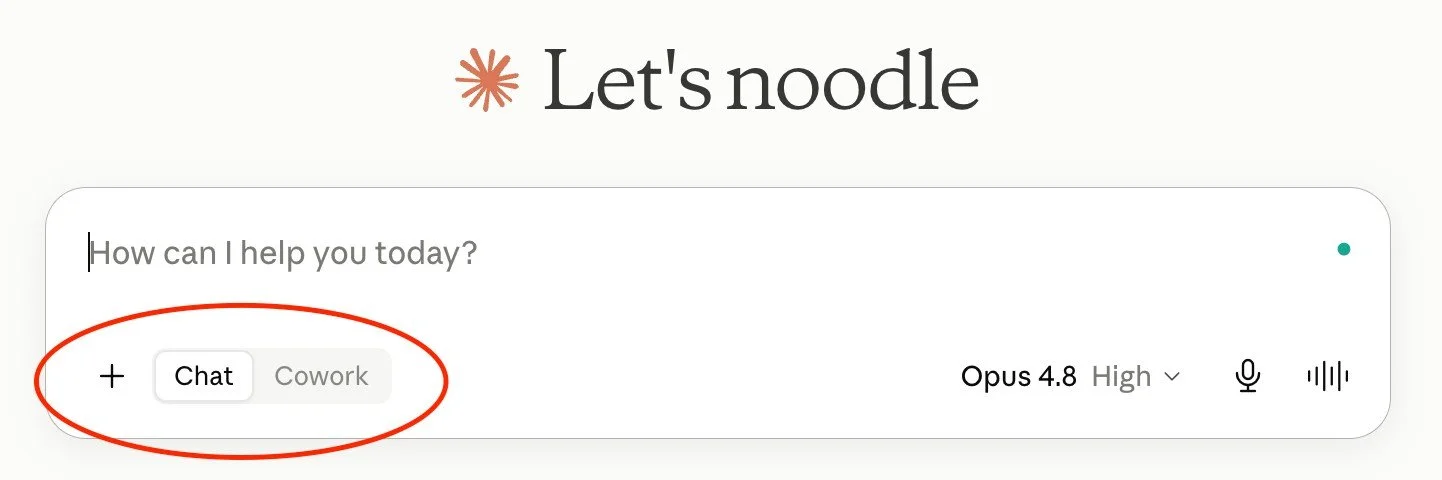
Cowork is a separate mode inside Claude, sitting right next to the chat you already know, built for jobs rather than questions. It runs on the same underlying engine as Anthropic's coding agent (Claude Code), pointed at everyday knowledge work instead of code, which is a technical way of saying it can be trusted with a task that has several steps and left to work through them. It can also carry out work with the files on your computer, making it insanely more useful than a normal chat.
Here's what that looks like in practice, using my own setup rather than a hypothetical.
Cowork runs my entire content operating system now. I'm far more strategic and consistent with my content than I used to be, because the system holds the plan and does the work instead of relying on me to remember it. Claude makes sure every testimonial I get is captured, so the good ones stop slipping through the cracks. It keeps all my Skills, Projects, and scheduled tasks backed up to Notion. The weekly intelligence report behind this blog runs the same way: Cowork pulls my analytics and search data, reads every post, and drafts the report before I sit down. And my morning email drafts are already waiting in my inbox from a scheduled task that runs before I open the laptop.
On desktop, Cowork works with your local files and your browser, which is where the deep work happens. And now, tasks that run in the cloud, like a scheduled report pulling from your connected apps, keep going even with your laptop closed. Tasks that touch your local files or browser need the computer awake and the desktop app open. Either way, you can start a job, check its progress from your phone, and pick up the finished output later. It plans the job first, shows you the plan, and checks in when a decision is genuinely yours to make.
What ChatGPT Work Actually Does
ChatGPT Work is OpenAI's answer to the same problem, launched on 9 July 2026. It's what OpenAI calls an agent inside ChatGPT, built on their Codex technology and powered by their new GPT-5.6 model.
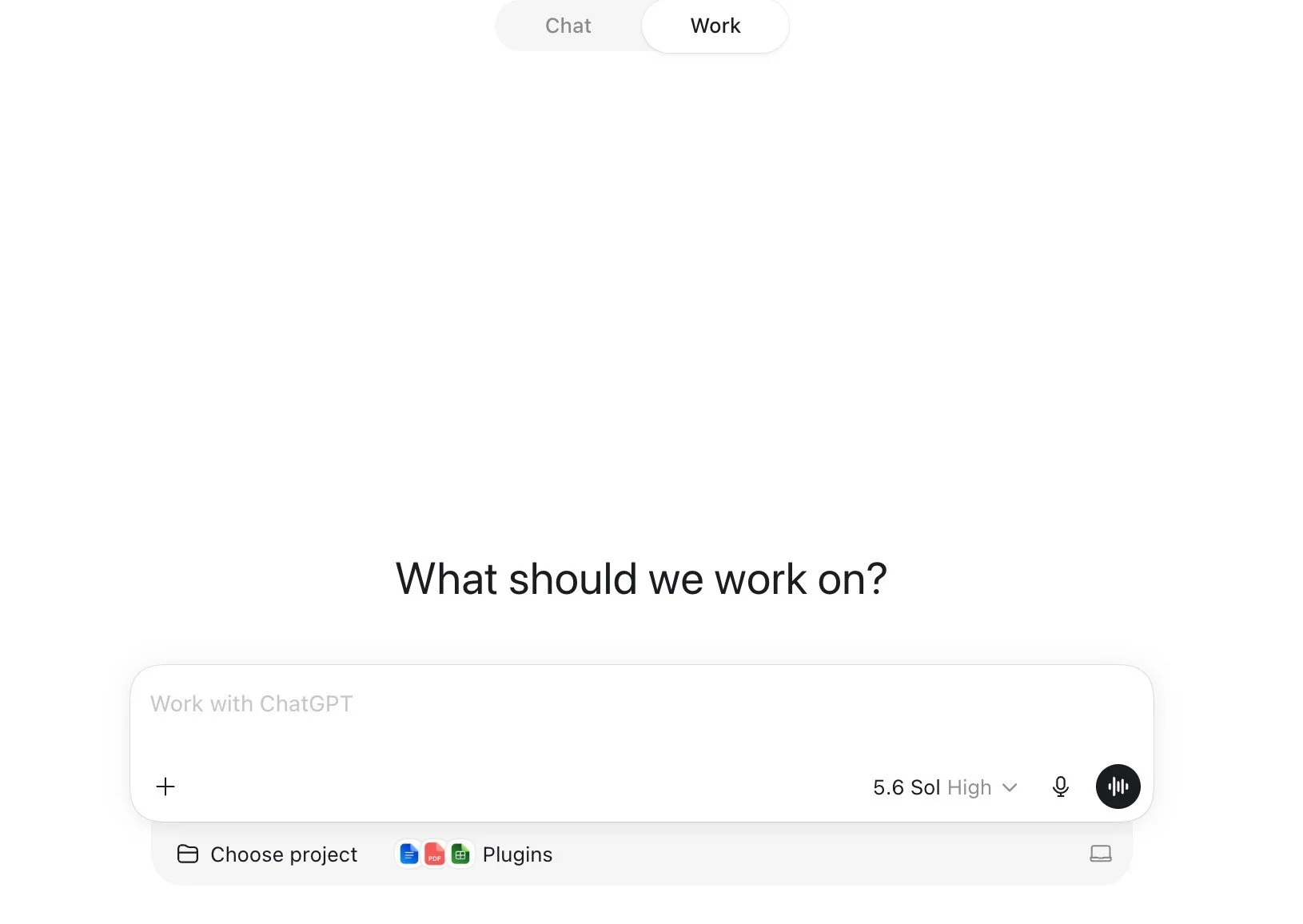
Credit where it's due: it's a genuinely capable release (even though it does look like it copied Cowork), and it does the same core job. You give it a goal, and it gathers information across your connected apps to create finished sheets, slides, docs, and even shareable web apps, staying with a project for hours by breaking it into steps and working through them independently.
Just like Cowork, it connects to your tools through plugins: Slack, Microsoft Teams, Google Drive, SharePoint, Gmail, Outlook, calendars, and CRMs like Salesforce. Its Scheduled Tasks feature runs work on a cadence or when something changes, so it can turn new Teams and Slack messages into updated docs while you're away. On the desktop app, it can use your local files and a built-in browser, and its Computer Use feature can click, type, and move files on your behalf.
The desktop app, with Chat, Work, and Codex together, is available on every plan including Free. There's no separate price tag; it draws from your plan's included usage, and heavier tasks use more of it.
If you already run your working day inside the ChatGPT and Microsoft ecosystem, this is going to feel like a natural extension of where you already are.
Want the full Claude Cowork setup laid out step by step for Claude Cowork specifically?
The Cowork Setup Kit walks you through getting Cowork set up properly, the guardrails to put in place before you give it access to anything, and your first real task.
It's free, and it's the guide I built because there wasn't one.

ChatGPT Work vs Claude Cowork: The Comparison
Feature for feature, these two are closer than the noise suggests. Here's how they line up on the things that actually matter to a solo founder.
| Claude Cowork | ChatGPT Work | |
|---|---|---|
| What it does | Takes an outcome, works across your tools, delivers finished work | Takes an outcome, works across your tools, delivers finished work |
| Launched | Desktop January 2026; web + mobile 7 July 2026 | 9 July 2026 |
| Maturity | Months of real-world use | New (at today's date) |
| Local files | Yes, on the desktop app | Yes, on the desktop app |
| Built-in browser | Yes, on desktop | Yes, on desktop |
| Runs on a schedule | Yes (scheduled tasks) | Yes (Scheduled Tasks) |
| Runs while you're away | Cloud and scheduled tasks keep going, even with the laptop closed; local-file tasks need the computer on | Cloud and scheduled tasks keep going; local-file tasks need the computer on |
| Connects to | Gmail, Drive, Calendar, Notion, Canva, Slack and more (authorise once, use everywhere) | Slack, Teams, Drive, SharePoint, Gmail, Outlook, calendars, Salesforce and more (via plugins) |
| Model | Claude's latest models | GPT-5.6 |
| On free plan | No (paid plans) | Desktop app yes; web/mobile from Plus up |
| Standout output | Inline charts and visuals, Artifacts, and dashboards connected to your app data | Publishing work as a shareable Site (web page or app) |
| Image generation | Not yet (inline charts and visuals only) | Yes, native |
| Best fit | You write, strategise, and work in the Claude ecosystem | You already live in ChatGPT and Microsoft tools |
The Unlock: Your Context Is Portable
Most "which should I pick" takes assume your business context gets locked inside whichever tool you choose. That's the opposite of how I teach this.
Your context, your brand voice, your frameworks, your standards, the instructions behind your skills, belongs in your own files. Not inside one company's tool.
When you build those as standalone assets you own, they travel. And because both Claude Cowork and ChatGPT Work work directly with the folders on your hard drive, you can point either tool at the same folder, the same files, the same foundation. I keep my documents as files I control, so the tool is the interchangeable part and my context stays mine.
That flips the whole decision. You're not choosing an ecosystem to get married to. You're keeping your foundation free and handing each job to whichever tool does it best. Build it once, point it at either.
This is the Architect Method in practice: your foundations are the asset, documented as files you own, and the tools are just engines you run them through. Do that, and "use both" stops being a compromise and becomes the obvious move.
If you want help building that portable foundation and getting Claude set up to run it, that's what Claude Unlocked walks you through.
So Which One Do You Actually Use?
Stop thinking about it as a switch and start thinking about it as job matching. Here's the honest breakdown.
Reach for ChatGPT Work if your working day already runs through ChatGPT and the Microsoft world (Teams, Outlook, SharePoint), or you want this on your existing ChatGPT plan without installing or learning anything new. It also has two things Claude doesn't yet: native image generation, and the ability to publish what it builds as a shareable Site. If your day already runs there, it's the path of least resistance, and that counts for a lot.
Reach for Claude Cowork if your writing, strategy, and content matter most, or you've already built your Projects and Skills in Claude. It's stronger at showing its work: inline charts and visuals, Artifacts you can refine in place, and dashboards that stay connected to your app data. It's had months longer in real businesses doing exactly this kind of work, and for content-heavy solo founders that maturity shows. The honest trade-off is that it has no native image generation yet, and heavier tasks draw down your plan faster.
Use both if that's what your week actually calls for, and plenty of people will. One tool for the jobs it's strongest at, the other for the rest. That's a deliberate call, not a cop-out. Being platform-agnostic protects you every time one of these companies changes its pricing, its features, or its politics.
The point that matters more than either tool: connecting your tools to an AI that works on a schedule and does the whole job is what changes how a one-person business runs.
This is the shift we've all been waiting for. Picking the right door into it matters less than actually walking through one.
Key Takeaways
The category shifted, not just the brands. ChatGPT Work and Claude Cowork both moved AI from answering questions to going and doing the whole job across your apps.
Cowork has a real head start. It's been doing live business work since January 2026; ChatGPT Work launched 9 July 2026 and is days old.
Local files no longer separate them. As of the July release, both work with your local files on desktop, so that's not a deciding factor.
Your context is portable. Keep your skills and files as your own and point whichever tool does the job best at the same folders. Don't get locked into an ecosystem.
Both is a valid answer. Matching each tool to the jobs it does best, and staying platform-agnostic, is the smartest position for a solo founder right now.
Frequently Asked Questions
Do I have to choose between ChatGPT Work and Claude Cowork?
No. They're strong at slightly different things, and plenty of solo founders will use both, one for the jobs it handles best and the other for the rest. Choosing a single tool matters far less than actually putting one of them to work in your business.
Is ChatGPT Work the same as Claude Cowork?
They're the same idea built by two different companies: an AI that connects to the apps you already use, works on a schedule, and delivers finished work rather than chat answers. Claude Cowork launched first, in January 2026, and ChatGPT Work followed on 9 July 2026. The core job is nearly identical; the difference is which ecosystem and model sits underneath.
Which one is better for a solo founder?
The one that's better at the specific job. Your context and skills are portable, so you can give both tools the same foundation from your own files rather than locking yourself in. Use Claude Cowork for writing, strategy, and exact data work; use ChatGPT Work for image generation and publishing. Match the tool to the task, not to where your files happen to sit.
Can I use both for different jobs?
Yes, and it's often the smart move. You might use one for writing and strategy and the other for the tools it connects to more naturally. Keeping your workflows portable across both means you're never stranded when one company changes its features, pricing, or direction.
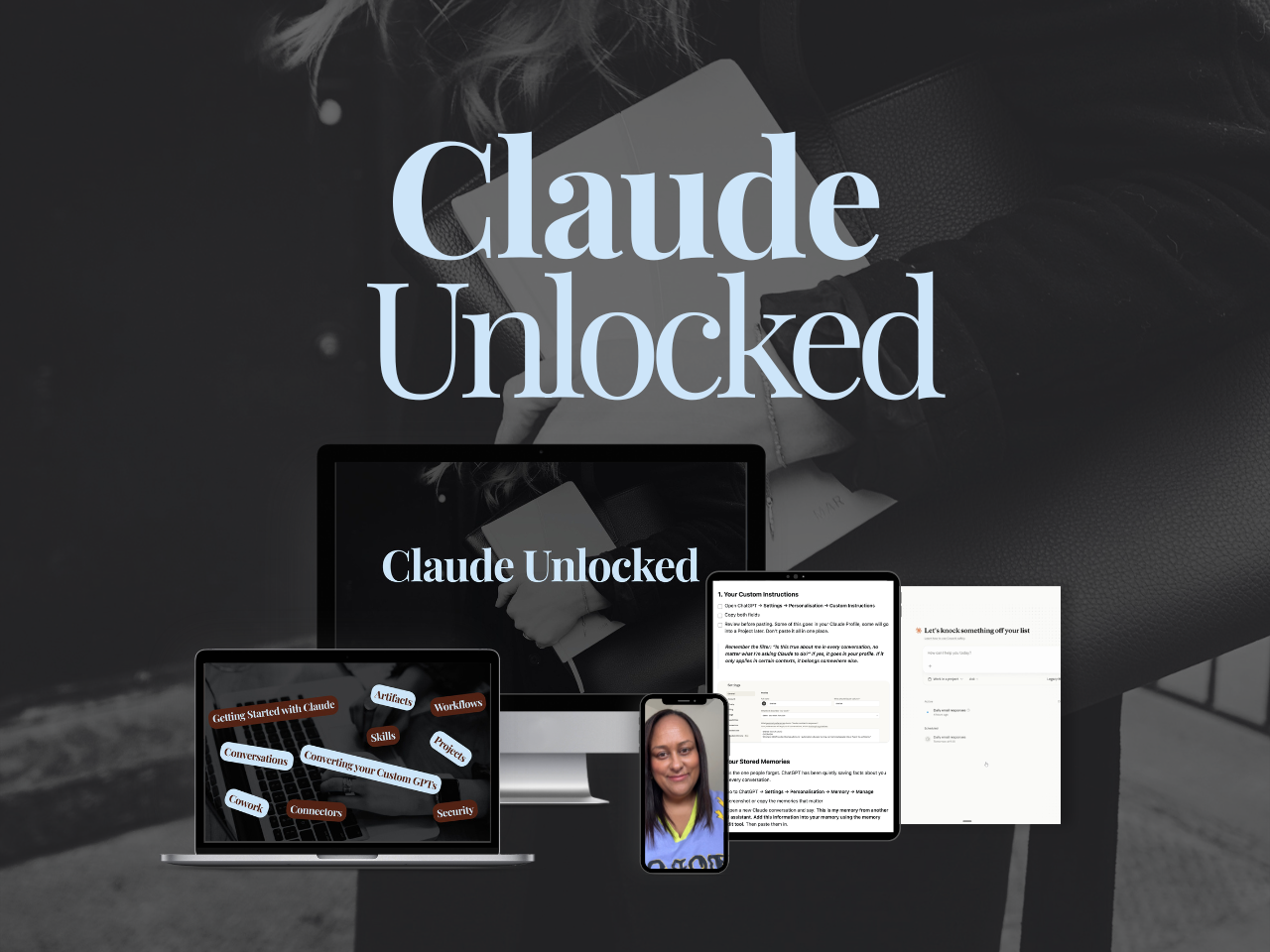
If you want to stop piecing Claude together from blog posts and set it up properly so it actually holds your business context and does the work, Claude Unlocked is the product I built for exactly that. It walks through Projects, Skills, Connectors, and Cowork in the order they actually matter for a business owner.
It's $47 for a limited time and takes an afternoon to complete.
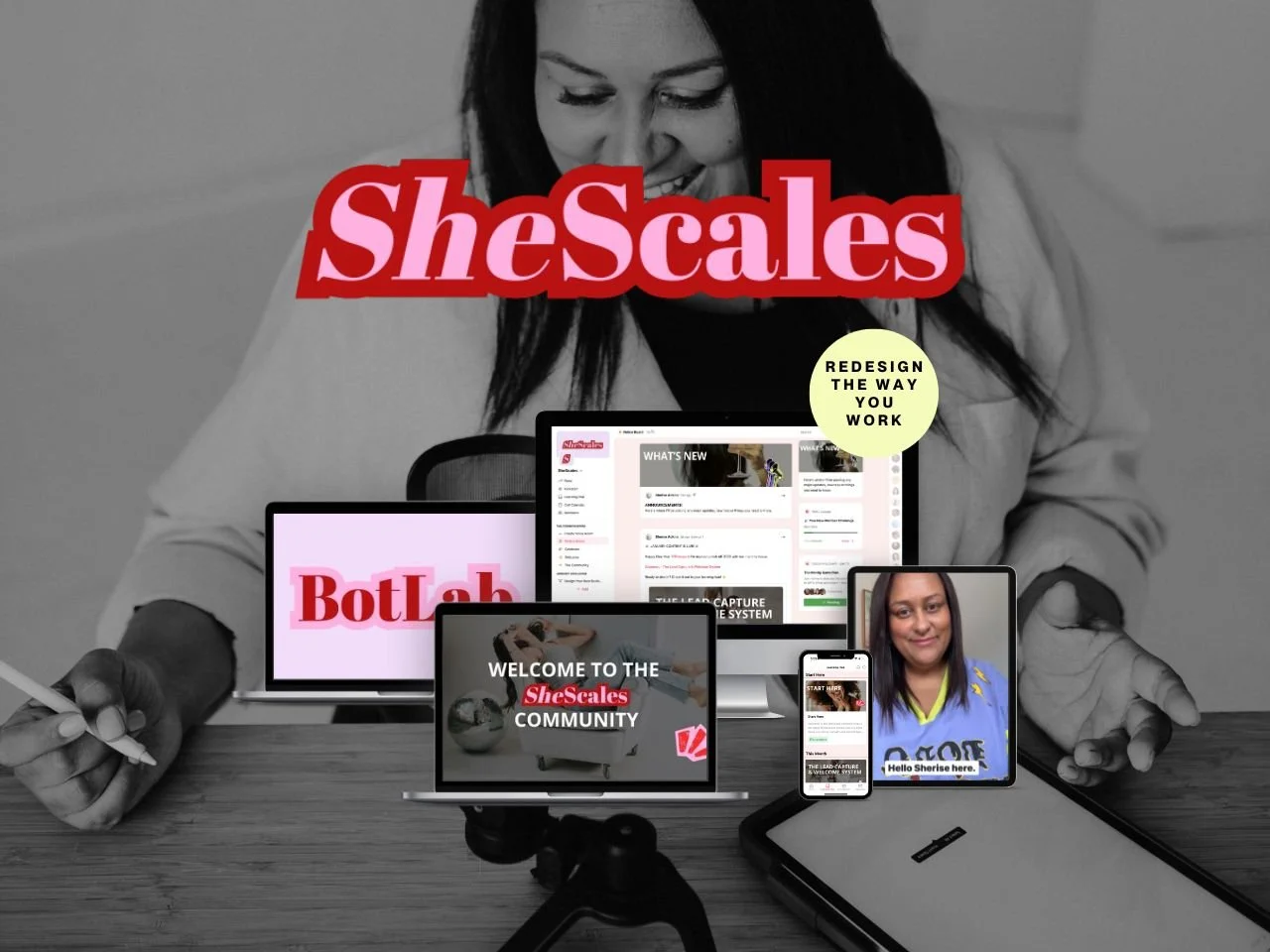
And if you're ready to build actual systems with Claude Cowork and ChatGPT Work, not just learn the tools, SheScales is where that happens.
Each month I build a real system in my own business, pull it apart, and hand over every component so you can build yours. The use cases above aren't hypotheticals. They're what's being built inside SheScales right now.
MEET THE AUTHOR

HEY, I'M SHERISE
I'm an AI strategist and educator based on the Central Coast of NSW, Australia. I help solo founders install AI systems that scale their business without scaling their workload and remove low-value work from their business so they can spend more time in strategy, creativity, and the work that actually moves the needle.
I run SheScales, the AI implementation community built for the person who IS the business and the whole team. I'm the founder behind 40+ AI assistants across ChatGPT and Claude, the Brand Playbook App, and a growing library of skills and systems used daily by hundreds of solo businesses.
I teach the Architect Method: the shift from chatting with AI to giving AI a job. It's the thinking framework for spotting where AI can genuinely help in your business, knowing how to architect the system, and deciding whether something should be a Skill, a Project, a GPT, an automation, a combination of these, or stay manual.
I'm not here to inspire you. I'm here to hand you the architecture.
Read this next:
Claude Cowork Scheduled Tasks: The Work That Runs Before I Open My Laptop
ChatGPT vs Claude for Business (2026): Which One Should You Actually Use?
What Is an AI Architect (And Why Every Solopreneur Needs to Become One)
How to Actually Use ChatGPT Now (Work, Codex, GPT-5.6 and Everything Else That Changed)
How Claude Projects, Skills, Cowork and Scheduled Tasks Work Together
How to Stretch Your Claude Cowork Credits (Without Doing Less)